
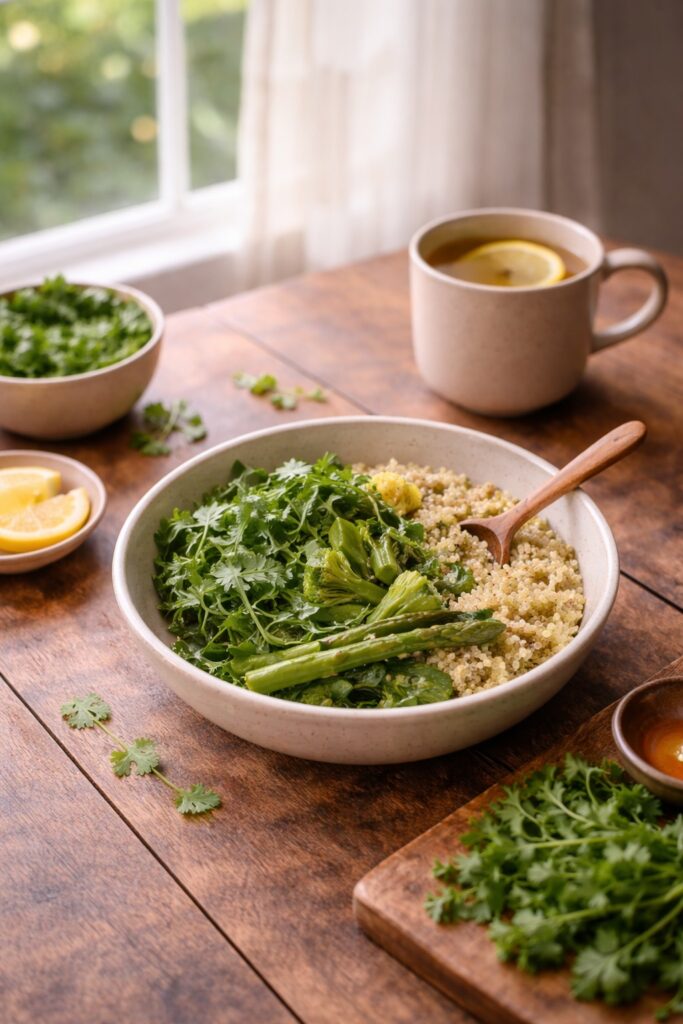
This kitchari recipe is one of the simplest and most nourishing ways to support digestion in Ayurveda.
There are times when the body doesn’t need more…
It needs less.
Less complexity.
Less stimulation.
Less effort just to process a meal.
And if you’ve ever felt that—heavy, bloated, or just slightly off—this is where kitchari becomes something you return to.
Not as a cleanse.
Not as a rule.
But as a way to come back to center.
Let’s sit with that for a moment.
What Is Kitchari?
Kitchari is a traditional Ayurvedic meal made with rice, split mung beans, gentle spices, and sometimes seasonal vegetables.
It’s soft, warm, and incredibly easy to digest.
In Ayurveda, it’s considered a complete meal—providing nourishment while giving the digestive system a break.
And that’s what makes it so powerful.
Not what it adds…
But what it simplifies.
Why Kitchari Supports Digestion
Digestion takes energy.
And when meals are complex, heavy, or constantly changing, the body is always working to keep up.
Kitchari removes that complexity.
It’s:
-
simple
-
predictable
-
easy to break down
Which allows the body to shift energy away from constant digestion…
And toward repair, clearing, and balance.
This is why kitchari is often used in Ayurveda during times of:
-
sluggish digestion
-
seasonal transition
-
feeling heavy or out of rhythm
It’s not about deprivation.
It’s about support. According to traditional Ayurvedic principles, simple meals like kitchari supports digestive balance and natural detoxification. https://www.healthline.com/health/how-to-do-a-kitchari-cleanse
When to Use Kitchari (A Gentle Reset)
This kitchari recipe is often used during seasonal transitions when digestion needs extra support.
One of the most supportive ways to work with kitchari is to eat it for a short period of time.
Not rigidly.
Not perfectly.
Just consistently enough to give your digestion a break.
For 2–3 days, you might:
-
eat kitchari for lunch and/or dinner
-
keep breakfast simple (warm fruit, oatmeal, or tea)
-
sip warm water or herbal teas throughout the day
Even this small shift can create noticeable change.
You may feel:
-
lighter
-
more clear
-
less bloated
-
more steady in your energy
And often… calmer.
Because the body is no longer working so hard.
Kitchari and Seasonal Nourishment
Kitchari is especially supportive during seasonal transitions—particularly in the spring.
As the body begins to release the heaviness of winter, digestion can feel slower or more sensitive.
This is where simple meals become powerful.
If you’re exploring this more deeply, you can read more in my guide to
Simple Spring Nourishment: Ayurvedic Tips for Digestion
Kitchari becomes a natural extension of that rhythm.
You can return to this kitchari recipe anytime yur body feels heavy or out of balance.
Classic Cleansing Kitchari Recipe
This is a simple, traditional version you can return to anytime your body needs support.
Ingredients
-
2 tablespoons ghee (or sesame oil)
-
1 teaspoon cumin seeds
-
1 teaspoon black or brown mustard seeds
-
1-inch piece fresh ginger, peeled and grated
-
½ cup mung beans, soaked and drained
-
¾ cup white basmati rice
-
4–6 cups water (less for thicker, more for soup-like)
-
1-inch piece kombu seaweed (optional, but recommended)
-
¾ teaspoon turmeric powder
-
1 pinch hing (asafetida) – optional
-
1 teaspoon salt
-
Up to 2 cups chopped vegetables – optional
Preparation
Heat ghee or oil in a medium pot over medium-low heat.
Add cumin seeds, mustard seeds, and ginger. Sauté gently for a couple of minutes, until the mustard seeds begin to pop. Stir often so the ginger doesn’t stick.
Add the rice and drained mung beans and cook for 2 minutes.
Pour in the water and raise heat to high. Bring to a boil, then reduce heat to medium-low.
Stir in kombu, turmeric, hing, and salt.
Cover and cook for 25–35 minutes, until the rice and mung beans are soft. Stir occasionally as needed.
If using vegetables:
-
add heartier vegetables (like cauliflower) early in cooking
-
add lighter vegetables (like greens) during the last 10 minutes
Soaking Tip
-
Whole mung beans → soak 6–8 hours (overnight is best)
-
Split mung beans → soak 2–3 hours
Split mung beans are preferred for easier digestion during cleansing.
Instant Pot Option
Use sauté mode to toast spices in ghee.
Add remaining ingredients and cook on high pressure for 10 minutes.
Allow natural release.
A Different Way to Think About Food
Kitchari reminds us that food doesn’t need to be complicated to be healing.
Sometimes the most supportive thing we can do…
Is simplify.
A warm bowl.
Gentle spices.
Easy digestion.
And a body that can finally rest.
This kitchari recipe is something you can
A Gentle Place to Begin
You don’t need to commit to anything strict.
Just try one meal.
Notice how you feel.
And let that guide you.
Because your body already knows what it needs.
Sometimes it’s just waiting for things to become simple enough… to hear it.